Tác giả: Meena N.S
Người dịch: Lê Quỳnh Hoa
Nguồn bài viết: Indian Yellow: Science unlocks the mystery of a fabled pigment | by Meena N.S | Medium
Thời điểm mà các bảo tàng tại Mỹ khám phá ra những bức tranh Ragamala ở dưới những căn hầm cổ xưa có lẽ vào khoảng năm 2019. Dọc khắp đất nước, từ San Diego tới Washington DC, những bảo tàng về nghệ thuật và lịch sử Châu Á đã tổ chức vô số các buổi triển lãm để trưng bày thể loại nghệ thuật độc đáo này. Nó đã phát triển rực rỡ tại Ấn Độ vào khoảng thời gian giữa thế kỷ 15 tới 18. Tranh Ragamala được sáng tác như những bức tiểu họa hoặc bản vẽ minh họa cho các bức họa chân dung. Chúng thường được đóng khung trong không gian tao nhã của những khu vườn hoàng gia và thường dùng màu gouache trên giấy để tạo nên nhiều sắc thái trang trí rạng rỡ như tranh thêu.
Điều tạo nên điểm khác biệt cho thể loại nghệ thuật này nằm ở sự diễn giải cái tôi cá nhân của từng họa sĩ về một đoạn thơ ghép – một đoạn thơ ca thường được viết dưới dạng một bản nhạc điếu văn. Có rất nhiều đoạn phiên khúc (verse) được bao hàm trong một tác phẩm, đặc biệt là trong tiếng Bắc Phạn, mặc dù tiếng Telugu lại không phổ biến đến vậy. Mỗi bức tranh Ragamala đều lấy những hình ảnh và phép ẩn dụ trong một đoạn thơ ghép cụ thể làm trung tâm. Đoạn phiên khúc ấy sẽ được khắc trên một tấm ván được đính ở trên cùng (một vài tấm ván đã bị thất lạc đối với một số bức tranh), trong khi tác phẩm được phơi bày ở phía dưới. Bức tranh không chỉ đơn thuần là sự tái hiện của ngôn ngữ thi ca. Thay vào đó, nó mang trong mình sứ mệnh tương tự như âm nhạc – để gợi lên cảm xúc tương ứng với giai điệu, tranh Ragamala sử dụng hình mẫu, tình thế và màu sắc để khiến trí tưởng tượng trở nên hữu hình. Do đó, mỗi tác phẩm đều là sự kết hợp tài tình giữa ba hình thức nghệ thuật lớn – âm nhạc, hội họa và thi ca. Cái hồn của một tác phẩm Ragamala nằm ở những không gian nội tại của cuộc sống và đời sống sinh hoạt ngoài trời; theo cả nghĩa đen lẫn nghĩa bóng. Cái “khung” mẫu mực này cho phép người họa sĩ được sáng tạo dưới vô vàn hình thức biểu đạt khác nhau: kiến trúc, phong cảnh, màu sắc và cảm xúc.
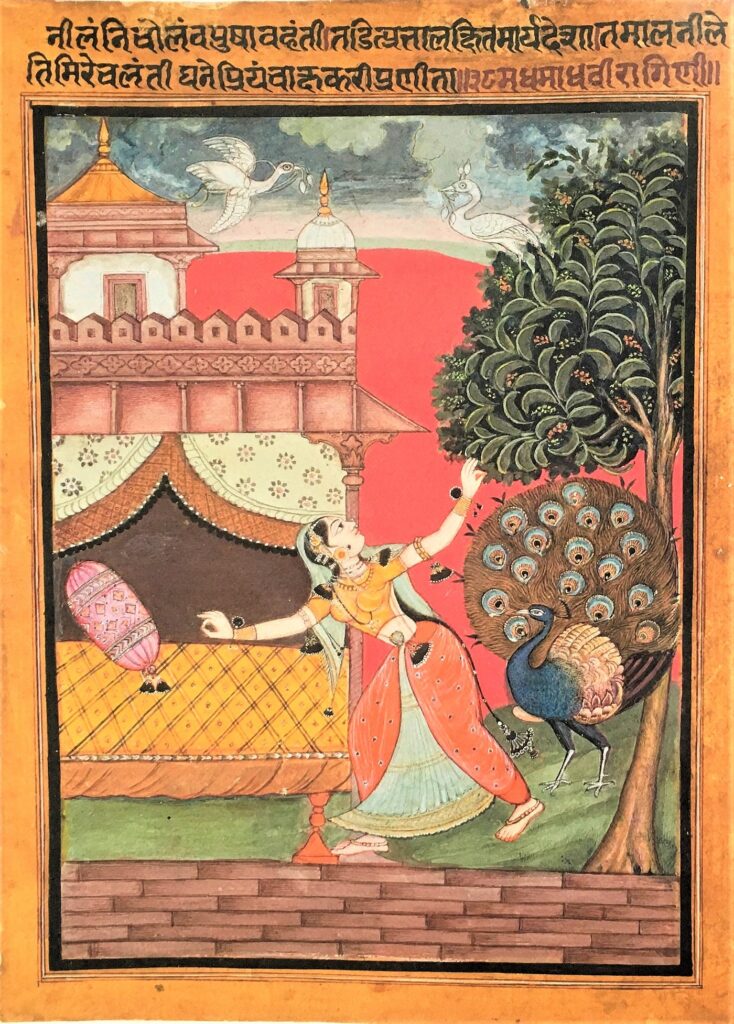
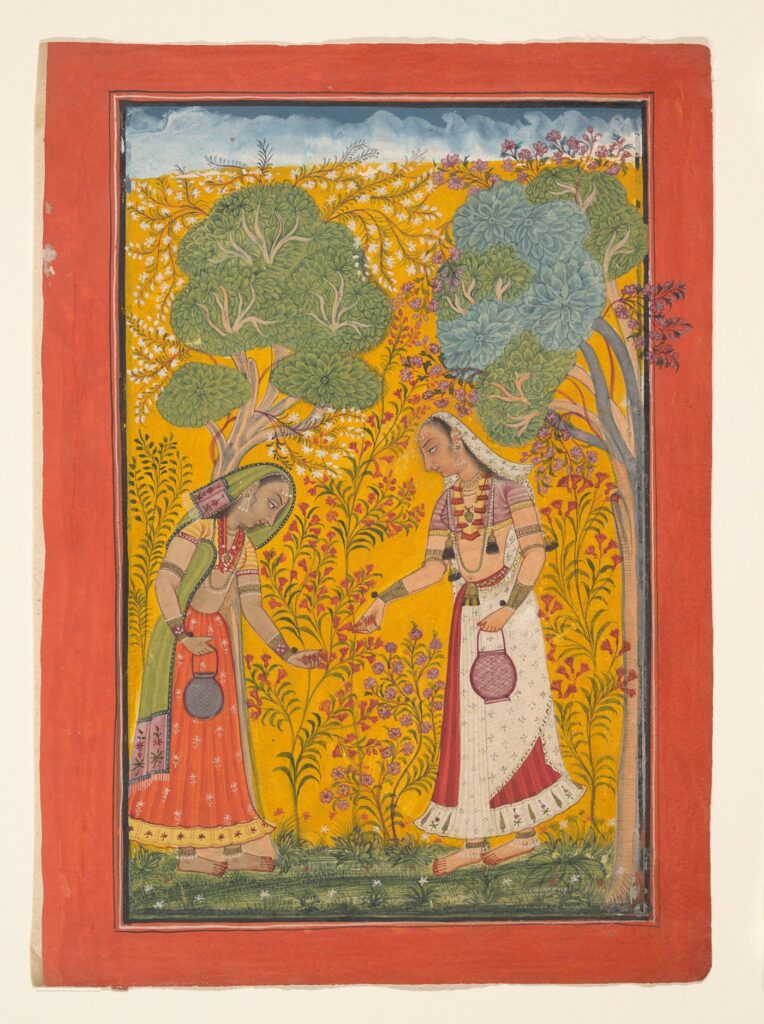
Phải: Ragini Vasanti. Trước được sở hữu bởi một gia tộc quý tộc tại Mandi, giờ được lưu trữ tại bảo tàng Metropolitan, New York.
Nguồn: https://www.metmuseum.org/art/collection/search/73149
Nếu một người biết nghe nhạc và biết đọc thơ; sự kết hợp hài hòa giữa ngôn ngữ, khúc ca và màu sắc chắc hẳn sẽ khơi gợi một sự rúng động đầy mê say trong lòng người đó. Nhưng chỉ người có sự trau dồi kiến thức cần mẫn về nghệ thuật may ra mới có thể thấu hiểu và trân trọng được số ít tác phẩm. Thấu hiểu điều đó, những người giám tuyển đã cẩn trọng tái hiện lại không khí của tác phẩm bằng những bài thuyết giảng, giải thích về âm nhạc và thi ca song song với tác phẩm được trưng bày. Tuy nhiên, kể cả khi thiếu các kiến thức về nhạc lý, những bức họa Ragamala vẫn gây mê đắm về mặt thị giác, nhờ cả vào những gam màu mạnh mẽ và sự tinh tế trong bố cục của chúng.
Tất cả màu sắc của dòng tranh Ragamala đều có xuất xứ từ tự nhiên, được chiết xuất và chọn lọc để tạo nên sự sống động đầy mê hoặc. Nhưng trong số chúng, một gam màu nổi bật trên tất thảy – có thể dễ dàng thu hút sự chú ý của người xem ngay từ ánh nhìn đầu tiên. Nó dường như là sự hòa quyện hoàn hảo giữa màu vàng nghệ, ánh vàng lóng lánh của Mặt trời, sắc vàng cam đặc trưng của những trái xoài và cả sắc cam ngả vàng tuyệt diệu của những đoá cúc vạn thọ; tất cả sắc thái ấy quấn quýt và hoà trộn vào nhau với độ rực rỡ có thể sánh với tia nắng ngoài sa mạc. Đối nghịch hẳn với sức hút mãnh liệt ấy, màu sắc này lại có một cái tên khiêm tốn – “Vàng Ấn Độ”.
Trong thời hiện đại, và giống như hầu hết những màu sắc được chiết xuất từ thiên nhiên, vàng Ấn Độ giờ chỉ còn là màu tổng hợp và dễ dàng được tìm thấy. Tuy nhiên, không giống như những tuýp màu tổng hợp được bày bán tràn lan kia, nguồn gốc của màu vàng Ấn Độ vẫn còn là một bí ẩn. Tệ hơn, lượng thông tin ít ỏi còn lại về lai lịch của nó được cho là không thể kiểm chứng, bởi nó đã bị ngừng sản xuất từ những thập niên đầu tiên của thế kỷ XX. Kèm theo đó, không một tài liệu nào về nguồn gốc hay quá trình chiết xuất được tìm thấy. Vàng Ấn Độ đơn giản là biến mất, một cách tuyệt vọng. Tất cả những gì còn sót lại là một vài “viên” bột màu được lưu trữ trong viện bảo tàng và một câu chuyện đầy những chi tiết huyền hoặc – từ lâu đã được xem là bịa đặt. Hiện giờ, trải qua biết bao thập niên có cả sự rối loạn và lúng túng, cuối cùng làn sương mờ cũng tiêu tan nhờ những tiến bộ về hoá học đã giúp ta điền vào những điểm vẫn còn khuyết thiếu trong quá trình khám phá lịch sử.
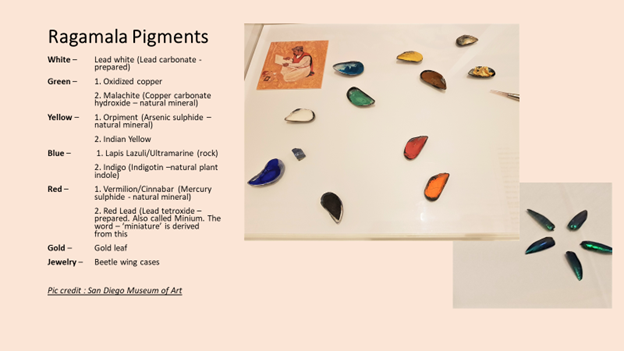
Nguồn: Triển lãm riêng của tác giả tại ‘Những hầm chứa bí mật’ – một triển lãm vào năm 2019 tại bảo tàng Nghệ Thuật San Diego.
Về nguồn gốc
Tiếp bước sự dẫn đầu của Lavoisier và Boyle, ngành hoá học phát triển rực rỡ, đặc biệt trong thế kỷ XIX, với công trình khám phá hơn 50 nguyên tố và sự ra đời của bảng tuần hoàn hoá học. Trong tinh thần khoa học sục sôi của thời đại này, việc tìm ra cách phân tích những hạt màu tự nhiên sớm được coi như một lĩnh vực nghiên cứu, với mục đích tạo ra những hạt màu tổng hợp bền nhất có thể. Cho tới thời điểm đó, phẩm nhuộm và hạt màu chỉ có ba nguồn chính – cây cỏ, động vật và khoáng chất. Bước đột phá đầu tiên về cấu trúc benzene (Kekule), song song với việc khám phá ra vòng benzene, aniline và những chất hydrocarbons thơm khác trong than đá (Hofmann), đã lát những viên gạch đầu tiên trên con đường “khai quật” những công thức hoá học của các hạt màu tự nhiên. Vì vậy, quá trình tổng hợp màu trong các phòng thí nghiệm đã ở rất gần thời điểm đó.
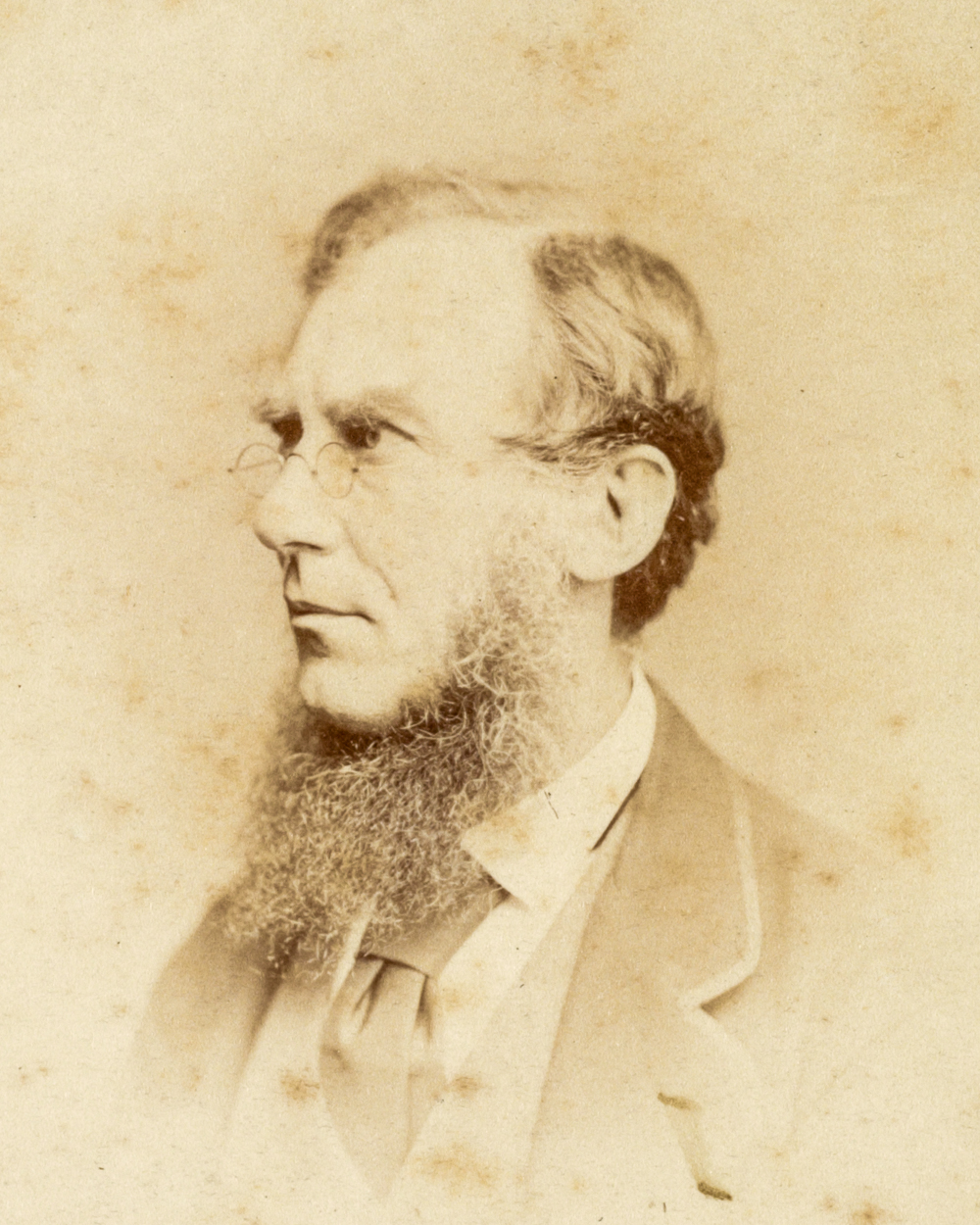
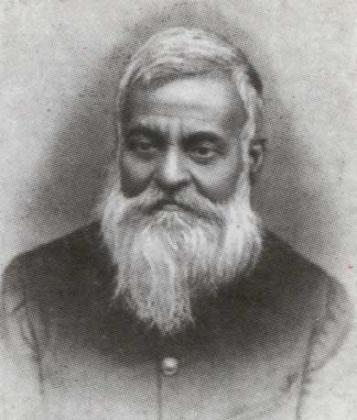
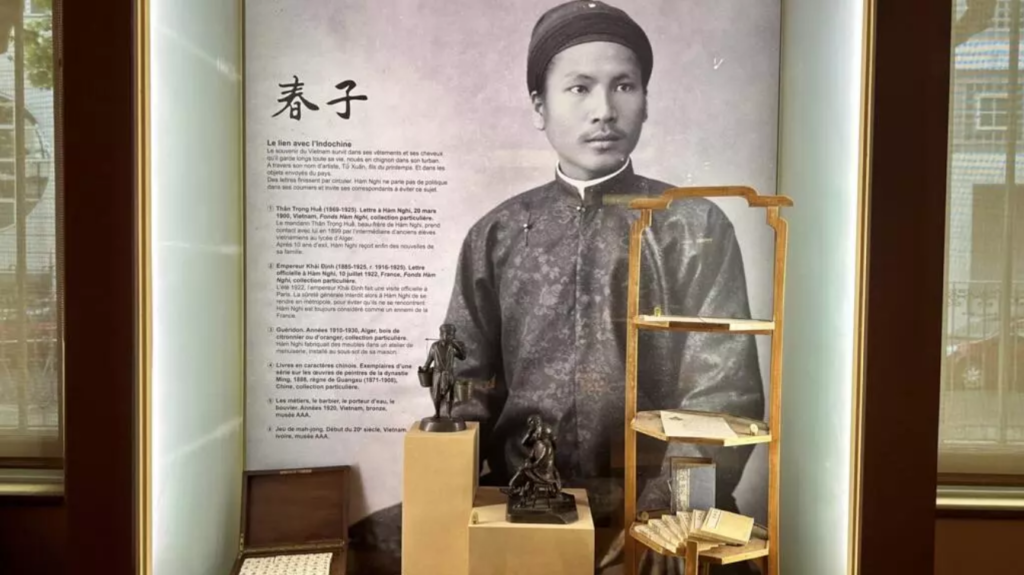
Phải: Troilokyanath Mukhopadhyay (T.N.Mukherji, 1847-1919)
Từ than đá, ta đã có màu tổng hợp đầu tiên được đặt tên là ‘Mauvein’ hay còn gọi là màu tím hoa cà. Nó nhuộm lên lụa một màu tím đồng nhất và có thể chống bạc màu theo thời gian. Cùng một nguồn gốc với than đá, hai màu Đỏ Aniline và Xanh Aniline cũng được tổng hợp thành công. Màu thứ tư được tổng hợp và dẫn đầu trong quá trình khám phá các hạt màu tự nhiên, đó là thuốc nhuộm Alizarin. Hạt màu mang tên Madder – được lấy tên từ loại rễ mang màu đỏ thắm mà nó được chiết xuất. Rễ Madder đã được sử dụng từ thời cổ đại, chuyên dùng cho việc nhuộm vải và nhuộm thảm. Thuốc nhuộm Alizarin từ rễ Madder đã mở ra cánh cửa cho những phân tích và công nghiệp chế tạo màu tổng hợp từ hoa hồng, cotton, hoa mẫu đơn, cây phong lữ, cây kim ngư thảo và một loạt hoa, quả cũng như các thực vật khác.
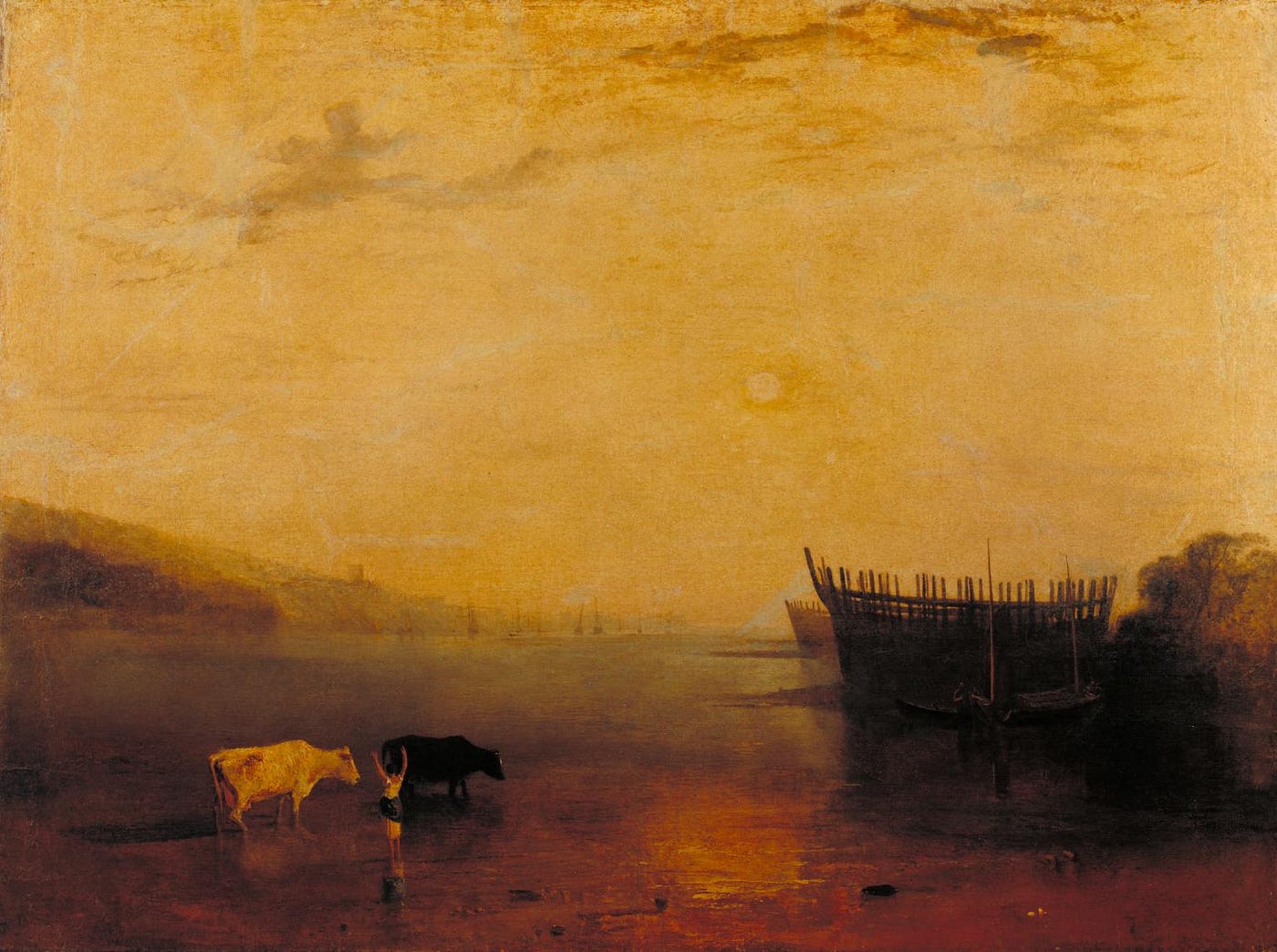
Rõ ràng, thế giới hoá học của những chất màu được gắn kết chặt chẽ với thế giới của những nhà tự nhiên học. Thật hiển nhiên khi J.D. Hooker – một nhà thực vật học và chuyên gia phân tích cây cối – lại đóng vai trò quan trọng trong câu chuyện của màu vàng Ấn Độ. Ngay từ khi ra đời, hoá học đã là một ngành khoa học cạnh tranh khốc liệt, với vô số cá nhân và quốc gia ganh đua lẫn nhau để khai thác được tiềm năng thương mại vĩ đại của nó. Hooker đã dành nhiều năm tại Ấn Độ, kiên nhẫn phân loại rất nhiều giống thực vật tại đất nước này vào tuyển tập mang tên ‘Flora Indica’. Thông qua công việc này, ông rất nhanh làm quen với yếu tố địa chất ở Ấn Độ. Năm 1882, khi ông nắm giữ cương vị quản lý những khu Vườn thực vật của Hoàng gia Kew, nhiều nhà khoa học Đức đã tiếp cận ông nhằm hỗ trợ truy ra vết tích của màu vàng Ấn Độ từ đâu mà tới. Trước đó, vàng Ấn Độ đơn giản chỉ được coi là một thứ thương phẩm được vận chuyển từ những khu chợ vùng Calcutta tới London. Theo cách khá gây tò mò, người Anh (đồng thời cũng là những người viết sử tuyệt vời) đã không công bố bất cứ một tài liệu nào về hạt màu được tìm thấy tại Ấn Độ, ngay cả khi màu vàng huyền thoại này đã được sử dụng dưới đôi bàn tay của vô số hoạ sĩ Anh Quốc. Một trong những người có tiếng tăm nhất phải kể tới J.M.W Turner, người đã thường xuyên sử dụng màu vàng Ấn Độ, dẫn tới cái tên: “vàng Turner” trong một khoảng thời gian.
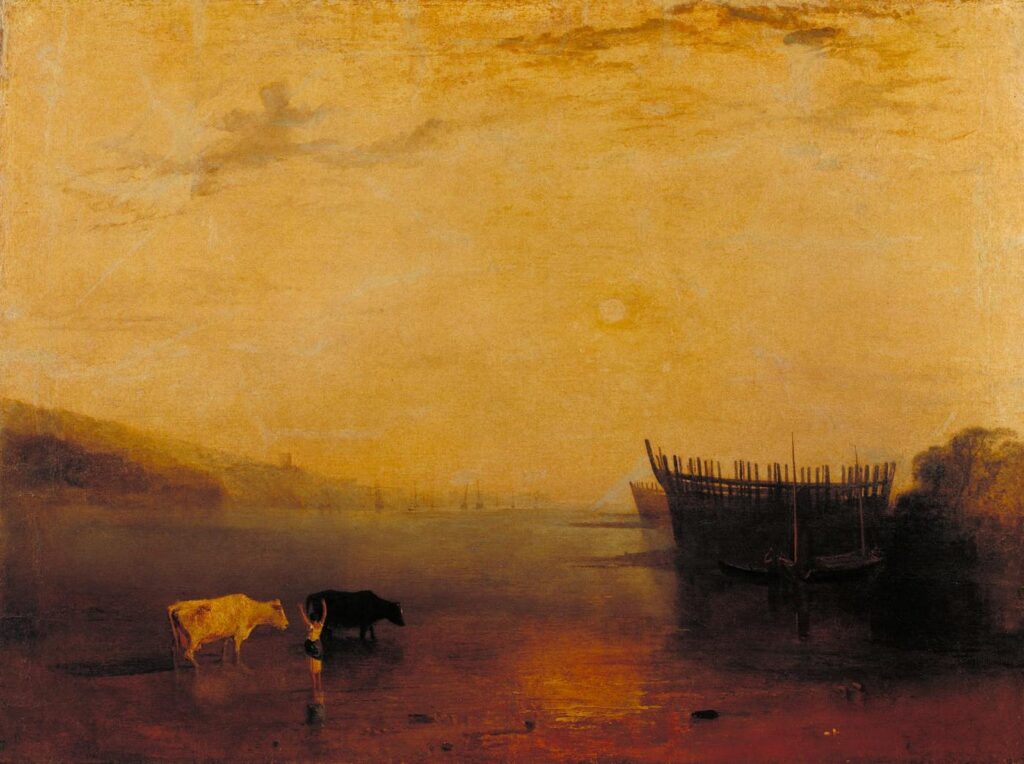
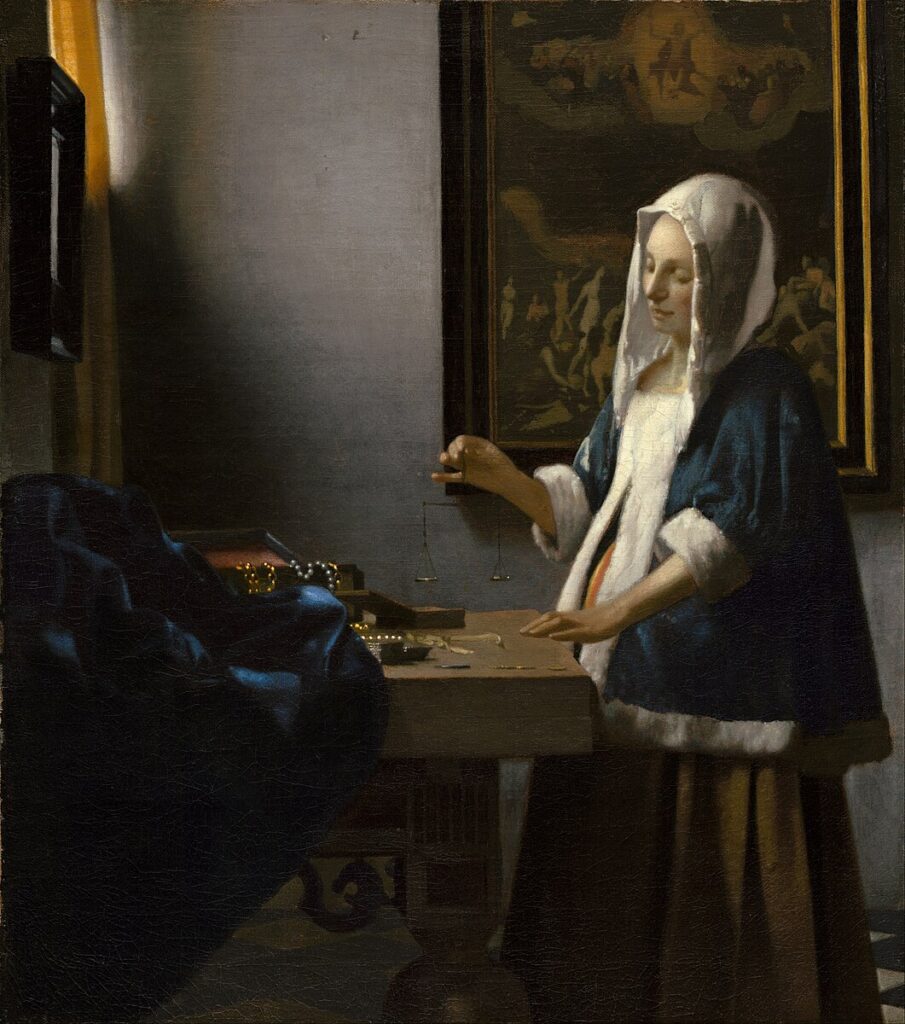
Cho tới thời điểm phẩm nhuộm tổng hợp được ra đời, màu vàng cũng được tính là một màu hiếm có, không nhiều sắc màu vàng khác được chiết xuất ra ngoài vàng Ấn Độ. Các nguồn khoáng chất, ví dụ như Thư hoàng và Hùng hoàng, là những loại đá chứa chất asen độc hại. Cây Gamboge (một loại nghệ tây) cũng được sử dụng để chiết xuất ra màu vàng. Nhựa của loại cây này cũng có độc. Hơn nữa, nguồn cung của cây Gamboge còn khá thất thường. Màu vàng Ba Tư cũng được chiết xuất từ nhuỵ hoa nghệ tây, và có chút ngả về xanh lá cây (kết hợp cùng với nhiều loại bột màu khác nhau) hơn là màu vàng. Ngược lại, màu vàng Ấn Độ không hề độc hại và mang tới một sắc màu rực rỡ, tỏa sáng và cực kì lâu bền. Vì thế, nó được ưa thích bởi rất nhiều hoạ sĩ. [Theo ghi chép, hai tác phẩm “The Starry Night” của Van Gogh và “Woman Holding a Balance” của Vermeer đã sử dụng màu vàng Ấn Độ.]
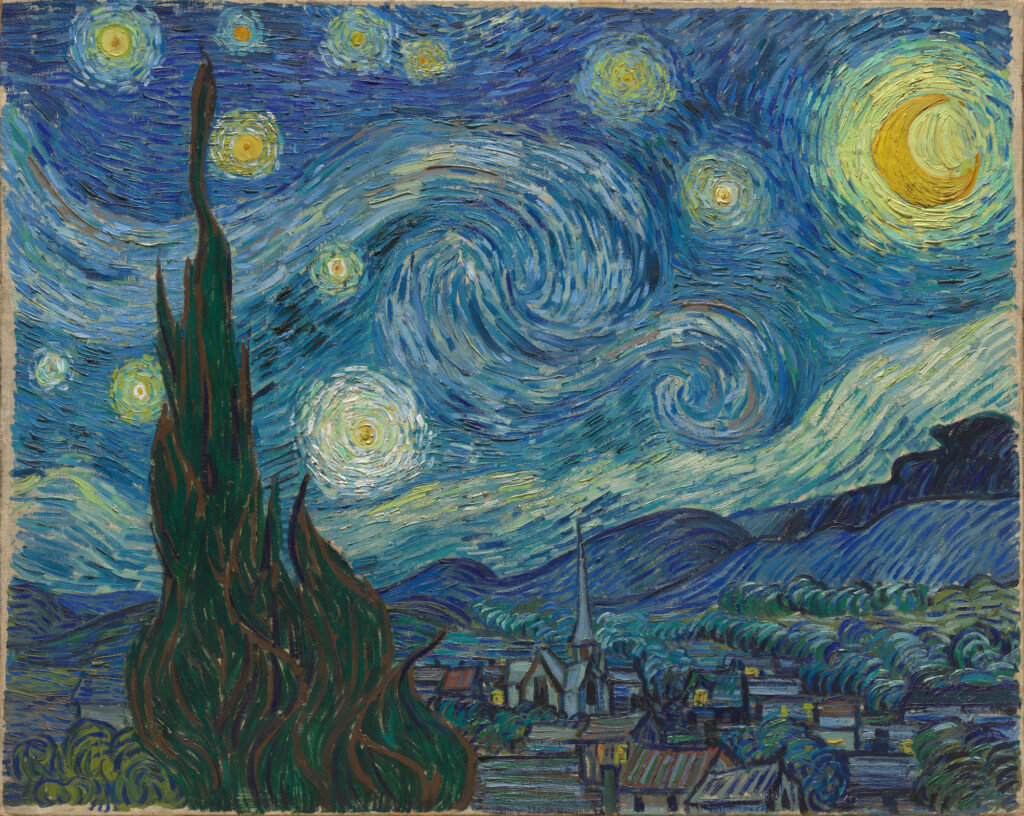
https://www.moma.org/learn/moma_learning/vincent-van-gogh-the-starry-night-1889/
Phải: Woman Holding a Balance. Johannes Vermeer, 1664.
Nguồn: Bảo tàng Nghệ thuật Quốc gia, Smithsonian, DC. https://www.nga.gov/collection/art-object-page.1236.html
Vì vậy, công cuộc truy tìm lai lịch của màu vàng Ấn Độ đóng vai trò quan trọng trong quá trình tổng hợp màu. Hooker đã rất trách nhiệm trong việc phản hồi lại các quan chức tại Calcutta, những người sau đó đã bàn giao công việc cho T.N. Mukherji, một nhà phân phối các tác phẩm nghệ thuật cho nhiều triển lãm. Mukherji đã tới thị trấn Munger tại Bihar (Tiếng Anh: Monghyr) và trở về với một tập báo cáo về những gì anh ta đích thân chứng thực: những viên tròn màu vàng được lấy từ phần cặn được chắt lọc sau quá trình đun sôi kéo dài hỗn hợp nước tiểu bò và cát. Ông cũng chú thích thêm rằng, loại nước tiểu bò đặc biệt này có một sắc vàng rất khác thường, do chế độ ăn riêng biệt bao gồm lá cây xoài tươi và sấy khô cùng một chút nghệ tây. Màu vàng Ấn Độ, do đó, được cho rằng có gốc từ động vật. Hooker lại cho rằng nó có gốc gác từ thực vật do những nghiên cứu sơ bộ trước đó đã cho thấy sự thiếu hụt nitơ trong thành phần.
Mukherji còn miêu tả chi tiết về tình trạng cơ thể của những con bò: chúng sở hữu cơ thể còi cọc, nom ốm yếu và suy dinh dưỡng do bị ép buộc phải ăn những lá xoài (có vị rất đắng), đồng thời chúng cũng không được cho phép có chế độ dinh dưỡng giống như những con bò bình thường. Sự tra tấn này còn trở nên khủng khiếp hơn thế, khi chúng mắc phải chứng bí tiểu nghiêm trọng, điều khiến chúng càng thêm khổ sở về mặt tinh thần. Những con bò này không thể tiểu tiện một cách tự nhiên và buộc phải nhờ đến sự giúp đỡ của con người để đẩy được chất thải ra ngoài – bằng cách trực tiếp ấn vào bụng của những con bò bằng tay không. Chế độ ăn khắc nghiệt, kéo theo sự sụt giảm nghiêm trọng về sức khoẻ của những con bò hoàn toàn phù hợp với điều kiện mà những nhà sản xuất màu vàng Ấn Độ có trong tay, do giờ đây họ có quyền điều khiển trực tiếp lượng sắc tố có trong nước tiểu.
Tuy nhiên, sự tàn bạo trong những hoạt động này đã không giấu diếm được bao lâu. Rất nhanh sau đó, việc sản xuất màu vàng Ấn Độ đã bị cấm hoàn toàn bởi người Anh dưới điều khoản của bộ luật Chống ngược đãi động vật, được chính phủ Ấn Độ thông qua vào năm 1890. (Chú thích bởi người viết: Trong bối cảnh lịch sử giữa Anh Quốc và Ấn Độ trong thời gian này, những nguyên do đến từ khía cạnh thương mại không hẳn là phi lý; tuy nhiên, lý do cụ thể lại không được tìm thấy trong bản ghi chép của Mukherji). Đây được cho là gốc rễ của màu vàng Ấn Độ, từ đó dẫn tới việc ngừng sản xuất và mua bán trên thị trường.
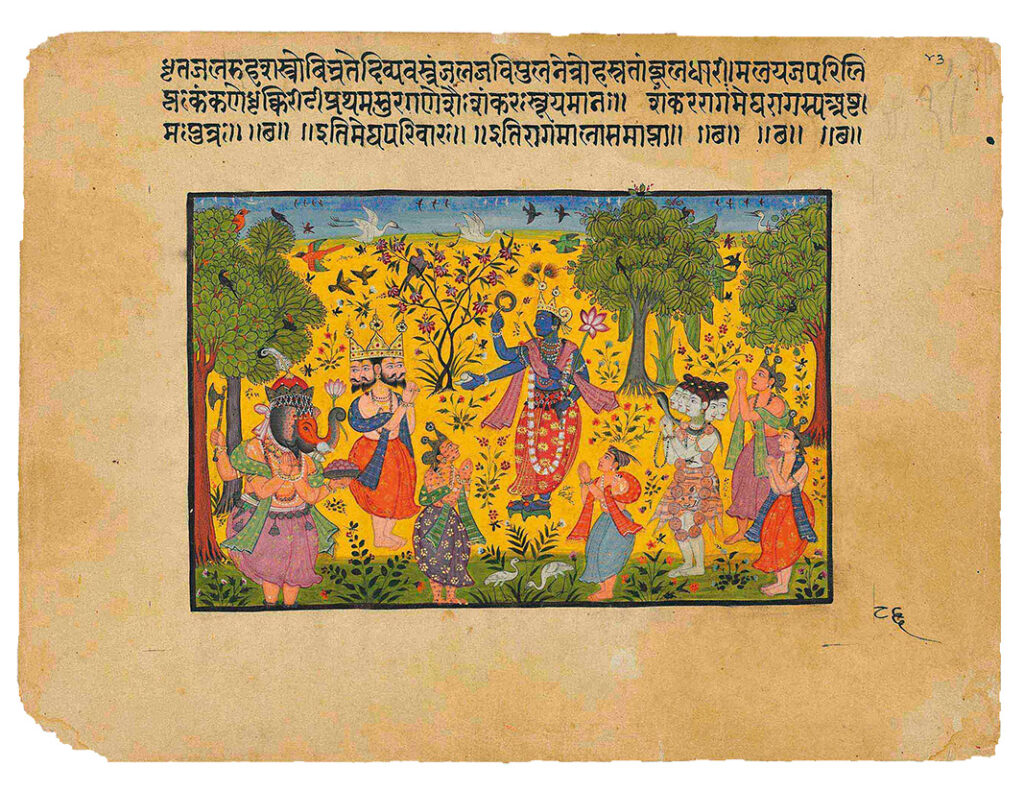
Nguồn: https://www.christies.com/lotfinder/Lot/an-illustration-to-a-ragamala-series-shankara-6072543-details.aspx
Song câu chuyện này lại mang tính cá nhân và thiếu tính xác thực. Câu chuyện đó, cùng với sự biến mất đột ngột của vàng Ấn Độ, tiếp tục gây tò mò cho các nhà sử học chuyên nghiên cứu về nghệ thuật. Ngay cả những con người từng sản xuất màu vàng Ấn Độ cũng tan biến vào trong lịch sử. Sau một vài thế hệ, chẳng còn một chút ký ức gì sót lại về nó hay bất cứ thương vụ buôn bán nào. Không có cách gì có thể chứng thực được câu chuyện, ngoại trừ thông qua những diễn giải khoa học. Và để làm được điều đó, những nhà khoa học đã bắt đầu bằng câu hỏi cơ bản nhất: Những hạt màu trong vàng Ấn Độ có nguồn gốc từ thực vật hay động vật?
Phân tích thành phần hoá học của màu vàng Ấn Độ
Mukherji đã vô cùng tận tâm khi vận chuyển bản báo cáo của ông tới Hooker kèm theo một kiện hàng. Nó bao gồm: một viên màu vàng Ấn Độ nguyên chất từ những khu chợ ở Calcutta, một viên từ Munger (Monghyr), một số loại khoáng chất cũng có sắc vàng được nhập khẩu từ London, một chai nước tiểu từ con bò đã cung cấp nguyên liệu để chiết xuất màu tại Munger, một chiếc ấm đất dùng để đun hỗn hợp, một cái bao tải dùng để lọc hỗn hợp sau khi đun sôi và một nắm lá xoài. Sau khi nhận được bưu kiện, Hooker đã gửi một lượng màu từ Munger tới nhà hoá học người Đức đầu tiên yêu cầu mẫu vật – Giáo sư Graebe. Ông Graebe đã tiến hành phân tích kỹ lưỡng các thành phần hoá học và chỉ ra rằng bột màu vàng Ấn Độ là một hỗn hợp gồm Axit Euxanthic (51%) và các chất bay hơi khác chưa được tìm thấy (42%). Ông cũng lưu ý thêm rằng cấu trúc của axit euxanthic là sự kết hợp giữa axit glucuronic và euxanthone ở dạng muối (thường là muối magie). Axit euxanthic hiếm khi được tìm thấy trong thực vật và do đó, sự tập trung của ông hướng vào các thành phần của nó.
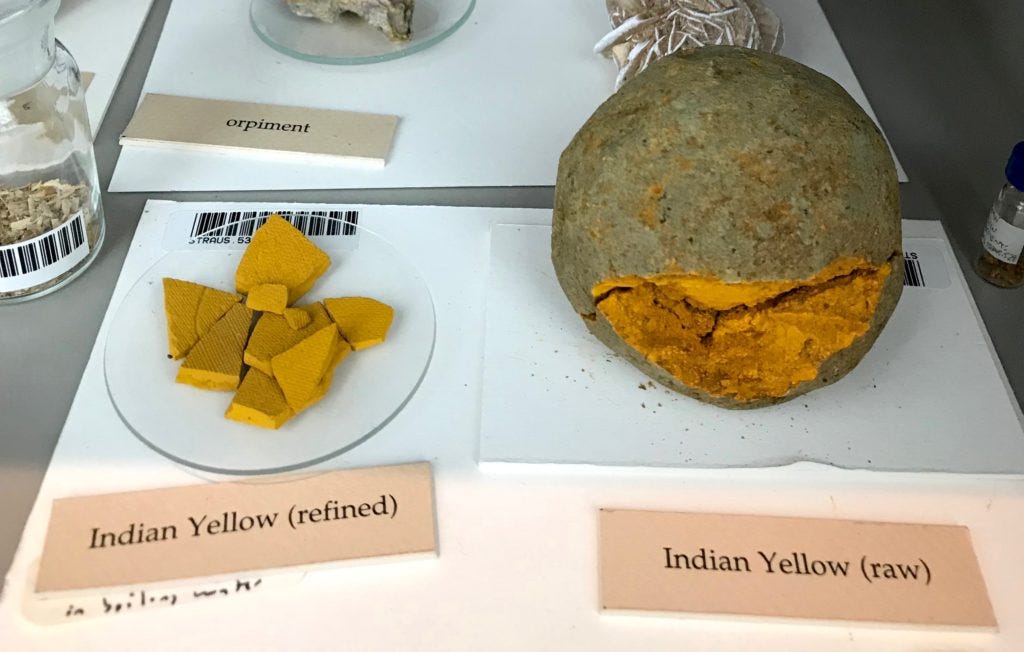
Nguồn: The Paris Review https://www.theparisreview.org/blog/2018/07/12/the-harvard-color-detectives/
Axit glucuronic thường được gọi là axit-đường. Trong tự nhiên, nó thường được tìm thấy trong các loại vỏ và được sản sinh từ quá trình sinh hoá của glucozơ thông qua phản ứng oxy hoá. Nó đóng vai trò là một chất liên hợp hoặc một chất liên kết hiệu quả với độc tố, chất gây nghiện và các chất trung gian trong các phản ứng trao đổi chất. Một chất hoặc hợp chất có thể liên kết với axit glucuronic, trở thành một glucuronide có thể tan trong nước và được bài tiết an toàn khỏi cơ thể. Vì thế, axit euxanthic cũng tương tự như euxanthone glucuronide (euxanthone + axit glucuronic = euxanthic acid hay còn gọi là euxanthone glucuronide).
Axit glucuronic có ở trong cả thực vật và động vật. Sự có mặt của nó trong viên màu từ Munger hé lộ cho ta thêm một chút thông tin. Mặt khác, cả euxanthone và xanthone đều là hai hợp chất có hoạt tính sinh học, được tìm thấy ở rất nhiều họ thực vật trong tự nhiên. Một trong số đó là giống xoài Ấn Độ — Mangifera indica — sở hữu lượng lớn xanthone trong lá, quả, vỏ cây, hạt và cả dẫn xuất của nó. Tới đây, ta đã tìm ra được sự liên kết giữa nguồn gốc thực vật (xanthones trong xoài) và một nguồn gốc động vật khả thi (glucuronide). Câu chuyện của Mukherji dường như là có thật. Câu hỏi được đặt ra cho chúng ta tưởng như đã chìm vào một đáp án thiếu sự tin cậy mà không một ai muốn xác minh. May mắn thay, điều đó đã không xảy ra.
Chìa khoá nằm ở Vườn thực vật hoàng gia Kew
Công cuộc tìm hiểu về các chất hóa học trong màu vàng Ấn Độ trên khắp thế giới đã được nghiên cứu kỹ lưỡng bởi hai nhà khoa học kiêm nhà bảo tồn – Ploeger và Shugar. Dù họ đã tìm ra câu chuyện lịch sử rất xa xưa này, họ vẫn thấy bản thân mình ở cuối chặng đường nghiên cứu, vướng phải một câu hỏi hóc búa vẫn chưa có câu trả lời – chuyện gì đã xảy ra với phần còn lại của kiện hàng mà Mukherji gửi? Với nhận định khôn khéo rằng việc tìm hiểu về kiện hàng sẽ cho ta thêm độ tin cậy về nguồn gốc lẫn sự thúc đẩy bởi những khám phá hóa học hấp dẫn của màu vàng Ấn Độ, thậm chí là cái kết cho toàn bộ hành trình, họ đã quyết tâm truy tìm dấu vết của nó.
Mukherji và Hooker đã trao đổi thư tín nhiều hơn vào những năm sau khi Hooker trở thành giám đốc của Vườn thực vật quốc gia Kew. Chẳng lấy làm bất ngờ, dấu vết dẫn đến hầm mộ của bộ sưu tập Thực vật học Kinh tế tại vườn Kew; yên vị trên giá và chờ đợi được khám phá ra, ta tìm thấy một gói hàng cổ xưa đã bị lãng quên từ năm 1883, tới từ Calcutta, với nguyên nhãn và nội dung bên trong! Sau khi có được những giấy phép cần thiết và ba mẫu màu vàng Ấn Độ được thu thập từ nhiều nơi khác trên thế giới, Pleuger và Shugar nhanh chóng bắt tay vào công việc.
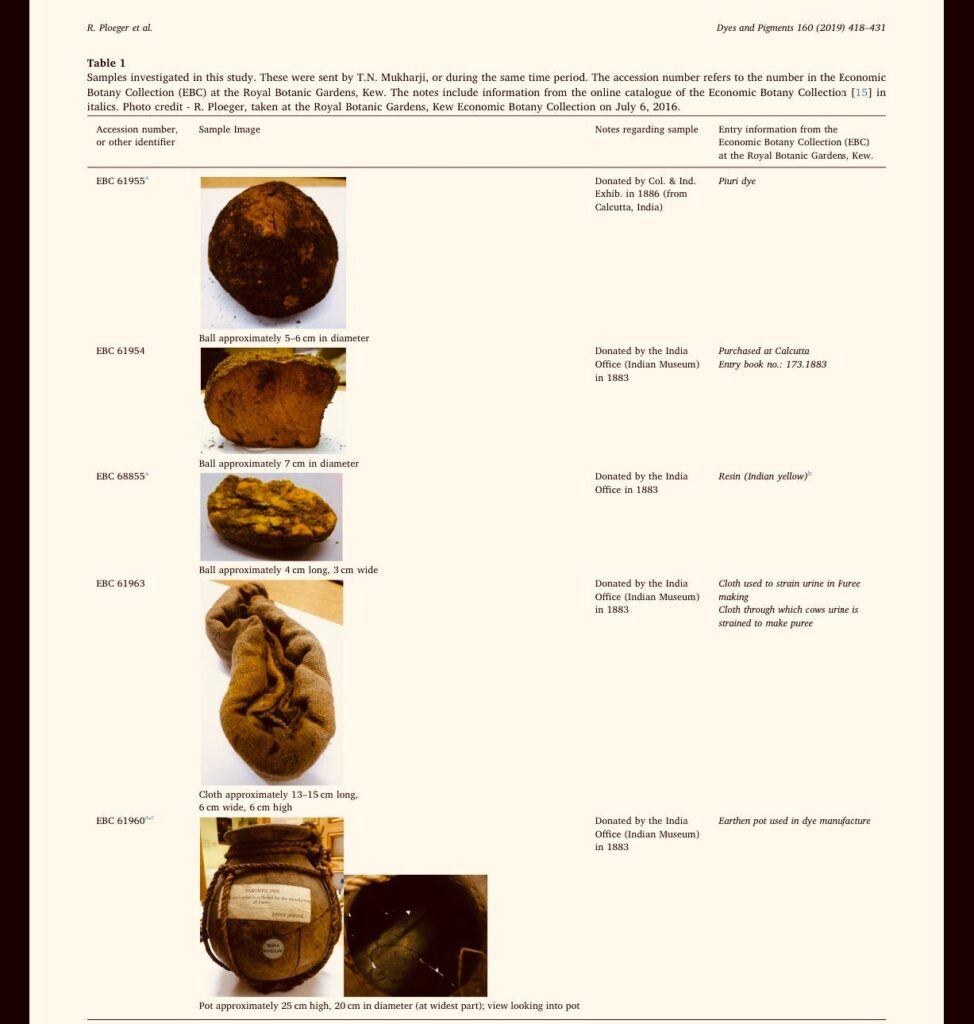
Bảy mẫu trong kiện hàng của Mukherji và ba mẫu vật đều được lần lượt trải qua quá trình phân tích bao gồm kiểm tra cảm ứng huỳnh quang, soi dưới kính hiển vi, quang phổ học và phương pháp khối phổ. Kết quả từ quá trình nghiên cứu kết hợp nhiều phương pháp này khiến hai nhà khoa học hào hứng song cùng lúc cảm thấy hết sức tầm thường. Như dự đoán, tất cả mẫu vật, cả chiếc nồi và tấm vải, đều chứa axit euxanthic, axit glucuronic và những dẫn xuất của chúng. Nhưng những mẫu vật này cũng hé lộ một chất hoá học đã “ẩn mình” từ rất lâu và chưa hề được nghiên cứu qua trước đó – axit hippuric. Phát hiện này không chỉ làm sống dậy cả công trình nghiên cứu mà cả tác động của nó đối với lịch sử của màu vàng Ấn Độ.
Axit hippuric là một chất chuyển hóa phổ biến của động vật nhai lại, được tìm thấy trong nước tiểu của nhiều loại bò và động vật móng guốc. Thêm vào đó, nồng độ của chất này sẽ tăng lên trong nước tiểu khi động vật đó có chế độ ăn giàu polyphenols (những hoá chất có nhiều vòng phenol trong cấu trúc). Lá xoài là một ví dụ. Điểm kết của hành trình này nay đã rõ ràng. Axit hippuric chính là mảnh ghép còn thiếu trong bí ẩn về màu vàng Ấn Độ. Nó đã kết nối từng mảnh ghép rời rạc trong câu chuyện của Mukherji – những con bò, lá xoài, nước tiểu vàng óng ánh và cả quá trình sản xuất – thành một thể hoàn chỉnh. Bản báo cáo của ông giờ đã được chứng thực và đó là lúc màn sương mờ bí ẩn xung quanh màu vàng Ấn Độ được xoá đi khỏi những khung tranh tuyệt đẹp.
Điểm kết của hành trình dài hơi này có thể khép lại câu chuyện về nguồn gốc màu vàng Ấn Độ nhưng nó lại là một phát minh, thay vì một phát hiện. Điều này dẫn ta tiếp tục với một câu hỏi vừa bí ẩn vừa gây tò mò: liệu đây có phải là bản ghi chép đầu tiên về một loại màu tổng hợp? Niềm hứng thú của chúng ta đối với màu sắc và bột màu đã tồn tại rất lâu. Từ thời cổ đại, xuyên suốt qua bao nhiêu nền văn mình và nền văn hoá, chúng ta đã khai thác sắc màu từ mẹ thiên nhiên để bồi đắp sức sống cho cơ thể đơn điệu của con người với nghệ thuật vẽ, xăm trổ, xỏ khuyên, trang sức từ các loại hạt tự nhiên, muôn vàn loài hoa và phẩm nhuộm. Để phục vụ cho bản thân mình, chúng ta đã “huy động” sắc tố có trong tự nhiên – những loài hoa, lá cây, vỏ cây, rễ và cả khoáng chất; chiết xuất và sử dụng chúng như một màu đơn hoặc dưới dạng công thức hoá học pha trộn. Nhưng màu vàng Ấn Độ lại khác hoàn toàn, nó ngay từ đầu đã là một phát minh được sản xuất bởi loài người. Cách nó được phát hiện có thể gây choáng ngợp, nhưng màu vàng Ấn Độ rất có thể là sản phẩm đầu tiên của ngành công nghiệp tổng hợp màu.
Tôi đã đọc một quyển sách tuyệt vời về màu sắc của Victoria Finlay – ‘Màu sắc: Một lịch sử tự nhiên về bảng màu’ – vài năm trước đây; nhưng giờ với quan điểm mới này, tôi đã lật giở quyển sách thêm lần nữa. Trong mười chương, mỗi chương được viết riêng cho mỗi màu sắc khác nhau, bà đã giữ cho người đọc luôn luôn cuốn hút với những câu chuyện về vô số sắc màu có gốc từ địa chất và thực vật xung quanh chúng ta; về cả những nỗ lực đáng kinh ngạc của con người trên khắp địa cầu nhằm chiết xuất được màu sắc từ thiên nhiên. Vàng Ấn Độ cũng thu hút sự chú ý của bà ấy. Trong chương tên ‘Màu vàng’, bà đã ghi chép rằng bà cảm thấy rất hào hứng khi thất bại trong nhiệm vụ lần theo hành trình của Mukherji qua Calcutta và Munger. Quá nhiều thời gian đã trôi qua và bà không thể xác nhận được tính chân thực của bản báo cáo. Riêng câu chuyện của bản thân bà đã đủ tuyệt vời để tôi viết riêng thêm một phần dưới đây.
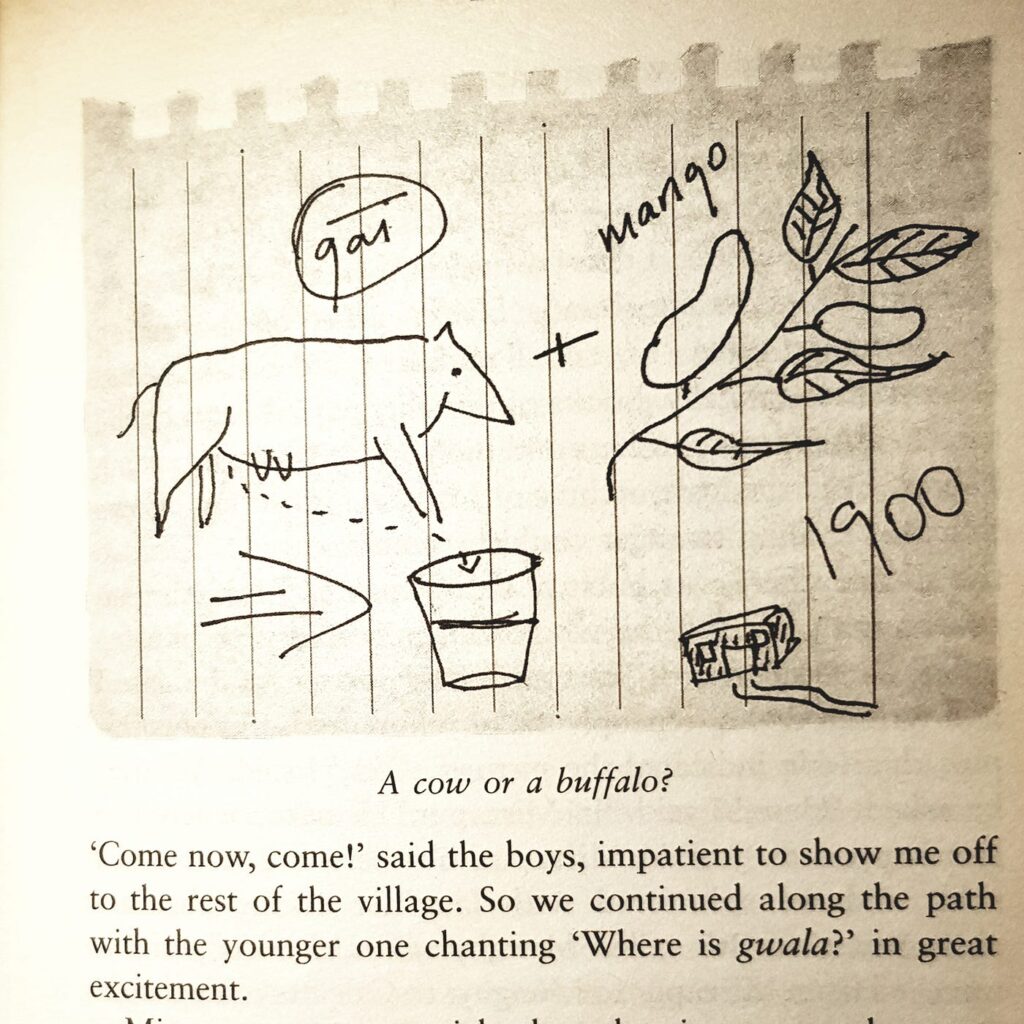
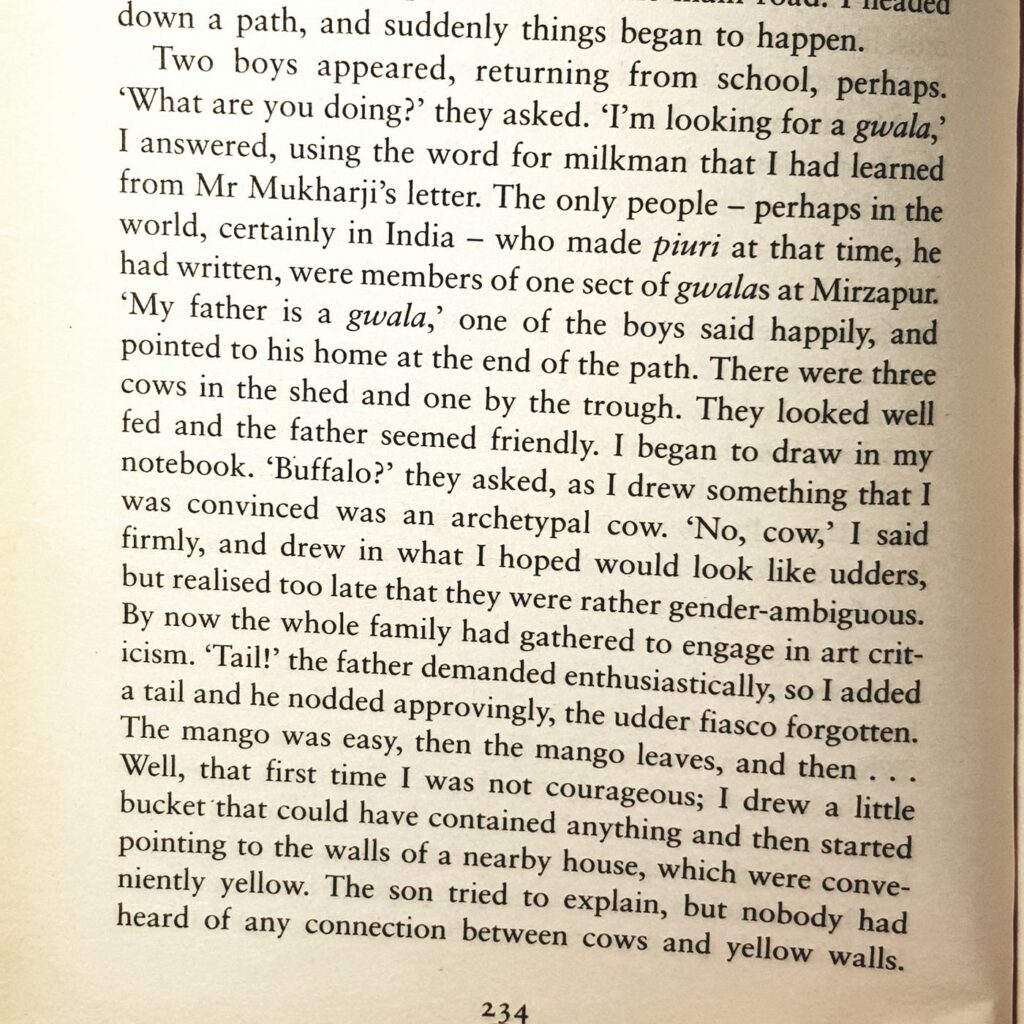
Sau khi đọc lại ‘Màu sắc’, tôi một lần nữa được du ngoạn trên chiếc cầu vồng của sắc đỏ, màu thổ hoàng, nâu, trắng, vàng, đen, tím, cam và xanh nước biển – tất cả đều là những hạt màu được chiết xuất, thậm chí là giả kim – nhưng lại bất lực trong việc tìm ra một câu chuyện bí ẩn tương tự như màu vàng Ấn Độ. Quyển sách còn chứa những ghi chép về những động vật bị giết chết để phục vụ cho việc sản xuất hạt màu, ví dụ như màu đỏ rệp son và tím Tyrean. Nhưng vàng Ấn Độ lại sử dụng cơ thể của một loài động vật, giống như một cỗ máy, để sản xuất ra hạt màu từ thiên nhiên. Động vật không bị giết chết nhưng lại được thuần hóa để phục vụ cho nhu cầu của con người. Tôi vẫn chưa hề biết đây có phải là câu chuyện đầu tiên hay duy nhất về sản xuất hạt màu, trước thời đại sản xuất tổng hợp hơn. Nhưng rất có thể, lời giải thích đặc biệt cho sự khôn khéo ác độc này của con người vẫn ẩn chứa nhiều mưu đồ ẩn giấu.
Giờ ta không còn có thể nhìn những sắc vàng rạng rỡ trong một bức tranh của Vermeer, một bức hoạ Ragmala, hay trong một bức hoạ cỡ nhỏ của người Ấn Độ, mà thiếu đi nỗi buồn phảng phất. Nỗi buồn ấy dành cho những sinh vật hiền lành đã phải trải qua hành hạ thể xác để giống loài khác có thể tạo ra được cái đẹp. Một con người khắc kỷ có thể tự hòa giải với suy nghĩ này, rằng sáng tạo luôn gắn liền với sự tàn nhẫn và đau khổ. Nhưng sự sáng tạo trong tự nhiên, và một số người còn gán chức phận ấy cho Chúa, là cuộc đấu tranh được chấp nhận một cách có ý thức, thấm nhuần mục đích sinh học: kiếm ăn và sinh tồn. Cuộc đấu tranh đó không thể bị đánh đồng với sự tàn bạo được dự tính trước mà chúng ta gây ra cho các sinh vật khác – không phải cho những mục tiêu cao cả có đi kèm việc chuộc lỗi tuyệt đối mà chỉ là để thoả mãn những mục đích nhỏ nhặt và thực dụng. Bí ẩn về sự cực đoan trong bản chất con người này sẽ mãi mãi không thể được lý giải. Mỗi chúng ta đều có thể đạt tới lòng cao cả tuyệt đối lẫn sự tàn bạo cùng cực. Ẩn ý đó được Thomas Carlyle diễn giải đầy trang trọng trong ‘Cuộc cách mạng Pháp’. Đó là những phân đoạn mà tôi học được từ người cha yêu dấu của tôi, ông thích trích dẫn nó, trong chương và câu thơ, bởi thứ ngôn ngữ thiên tài nó sở hữu và cả câu chuyện cảnh tỉnh mà nó kể:
Có những vực sâu trong trái tim con người có thể sánh ngang với tầng sâu thẳm nhất của Địa Ngục và cũng có những phần trong ta chạm được tới nơi cao nhất của Thiên Đàng; bởi lẽ cả Thiên Đàng và Địa Ngục vừa là bản chất của con người, vừa là sản phẩm do con người tạo ra – những điều màu nhiệm và bí ẩn vĩnh cửu, như chính con người vậy.
References and bibliography
- Finlay, V. (2002). Colour (pp 239–240). Hodder and Stoughton
- R. Ploeger, A. Shugar, The story of Indian yellow — excreting a solution, Journal of Cultural Heritage (2016), http://dx.doi.org/10.1016/j.culher.2016.12.001
- Magnesium and Calcium (in almost equal proportions), Silica, Aluminium and water made up the rest. Ibid pp 9–10
- Naturally occurring forms of euxanthic acid are rare and then only in the plant family called the Gentians.
- Xanthone (a precursor compound of euxanthone) is prolific in plants and fungi. Euxanthone too has a wide distribution across plant families but is especially numerous in two families — Clusiaceae and Fabaceae.
- R.Ploeger, A. Shugar, G.D. Smith and V.J. Chen, Late 19th century accounts of Indian yellow: The analysis of samples from the Royal Botanic Gardens, Kew Dyes and Pigments 160 (2019) 418–431 https://doi.org/10.1016/j.dyepig.2018.08.014
- Polyphenols are a naturally occurring (now also synthesized) class of plant compounds, structurally composed of multiple phenol rings, that have value as pigments and as nutriceutical antioxidants. Common polyphenols in mango leaves are: mangiferrin, anthocyanins, kaempferol and quercetin amongst others. If combined with curcumin, they turn a rich yellow color. This method of yellow pigment production is put to good use by Indonesia’s Batik industry. https://onlinelibrary.wiley.com/doi/epdf/10.1111/j.1541-4337.2008.00047.x
- The coming together of ‘fog’ and ‘yellow’ in the same sentence immediately brought TS Eliot’s Prufrock to my mind and I could not resist the great man’s magnetic pull https://www.poetryfoundation.org/poetrymagazine/poems/44212/the-love-song-of-j-alfred-prufrock
- Blue is a good example of these recipes. Three geographically disparate civilizations invented, sui generis, different recipes for blue. Chinese Blue, Egyptian Blue and Mayan Blue are three versions of the color that existed in ancient times, not as natural pigments but as ingenious recipe-combinations of plant and mineral pigments. (Detailed in Table 1)
- David Lee’s ‘Nature’s Palette’ is an excellent source on plant optics and the production of color in plants. It studies the subject in every part of plants; in roots, seeds, bark, leaves and flowers. It is a densely detailed report on the biology & chemistry of pigmentation as well as on plant structure and optics and is an extremely worthwhile read if you would like a book that delves deep in the science. Lee, David. (2010). ‘Nature’s Palette’. The University of Chicago Press.
Vui lòng dẫn nguồn cụ thể khi chia sẻ bài viết từ Artinsight. Khi sử dụng bài viết cho mục đích thương mại, liên hệ qua địa chỉ artinsight.vn@gmail.com.